
Non-profit research · Bangladesh
Cutting industrial carbon in Bangladesh, one factory at a time.
Shift to Zero Carbon is a non-profit research organization. We study how Bangladesh's factories (power, garments, cement and leather) produce emissions, and turn that research into practical, affordable ways to reduce them.
Bangladesh industrial emissions
- Power Gen40%
- RMG Sector27%
- Cement15%
- Leather/Other18%
*Data reflects total industrial emissions in Bangladesh.
Research
Measure where industrial emissions really come from.
Share
Publish open, plain-language findings anyone can use.
Act
Work with factories on reductions that pay off.
Our impact so far
Real factories. Real reductions.
Each icon ≈ 25 factories
Brick kilns, garment units, cement and leather plants across Bangladesh.
tCO₂e
Emission reductions at partner factories since we started.
Demo · a morning at the kiln
Data collection anyone can use.
Good climate decisions need good data, and much of it lives with factory workers and communities who may not read or write easily. Our app collects it with pictures, icons and voice instead of long forms.
Scroll to walk through one daily entry, screen by screen. The green ring shows where the worker taps next. Under each step: what the system does behind the scenes.
- Step 1 · Home
The worker opens today's checklist
Six tiles, one per activity type at this kiln. Coal and bricks are already done today; the worker taps Coal to update it. Or uses one of the two big buttons to speak or photograph.
Behind the scenesThe app loads this site's activity types from the company's configuration and shows which ones still need an entry today.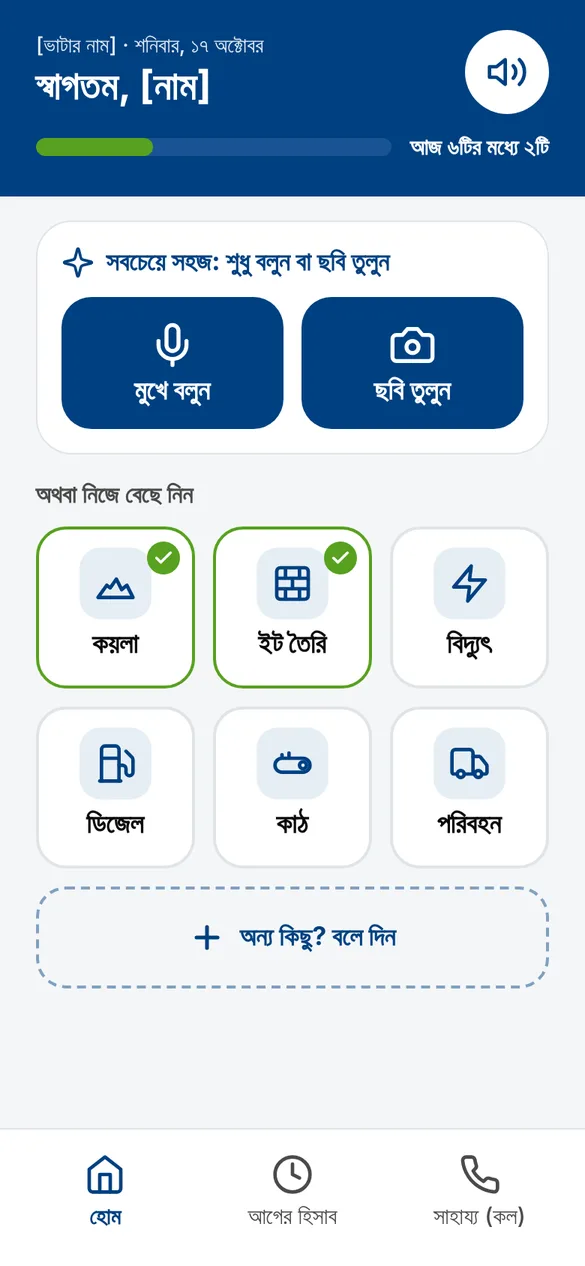
- Step 2 · Tap entry
Twelve sacks, counted with + and −
The question is one short Bangla sentence with a speaker button. The worker picks sacks as the unit and taps + until it says ১২, then taps Next.
Behind the scenes12 sacks × 50 kg (the company's sack weight) = 600 kg coal. The original entry and the converted value are both stored.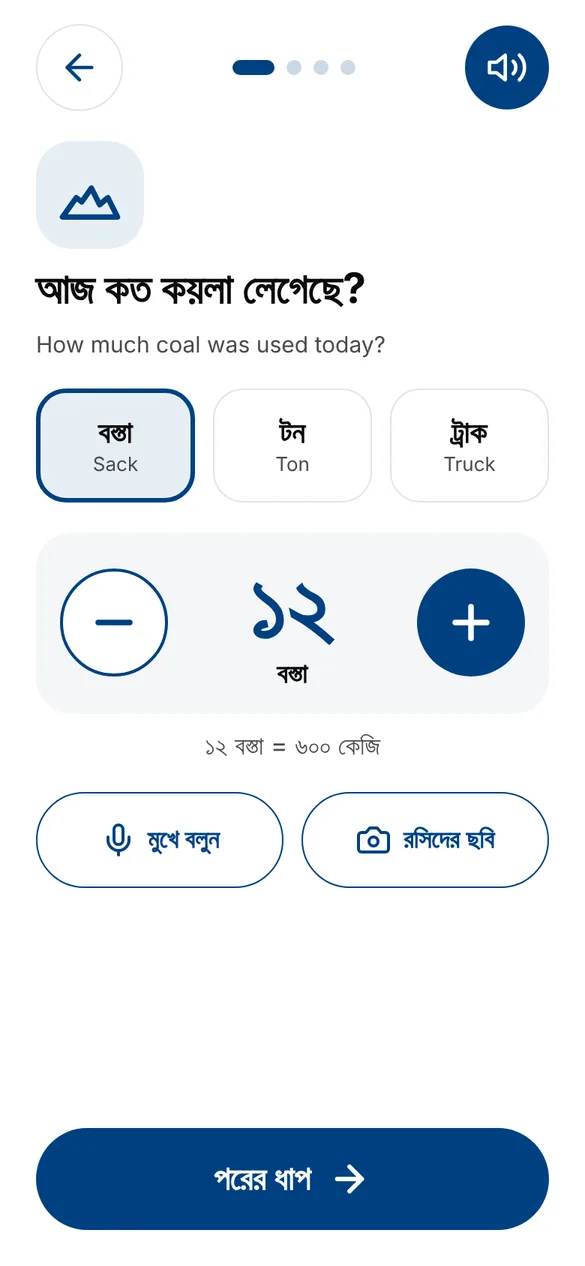
- Step 3 · Or by voice
Or say the whole day in one sentence
Instead of tapping each tile, the worker can speak: “twelve sacks of coal, twenty litres diesel for the generator, two vans of husk.” AI lists what it understood and asks about the item it doesn't know.
Behind the scenesBangla speech recognition, then item and unit extraction with a confidence score. “Husk” has no type yet, so it is kept aside and the admin is told.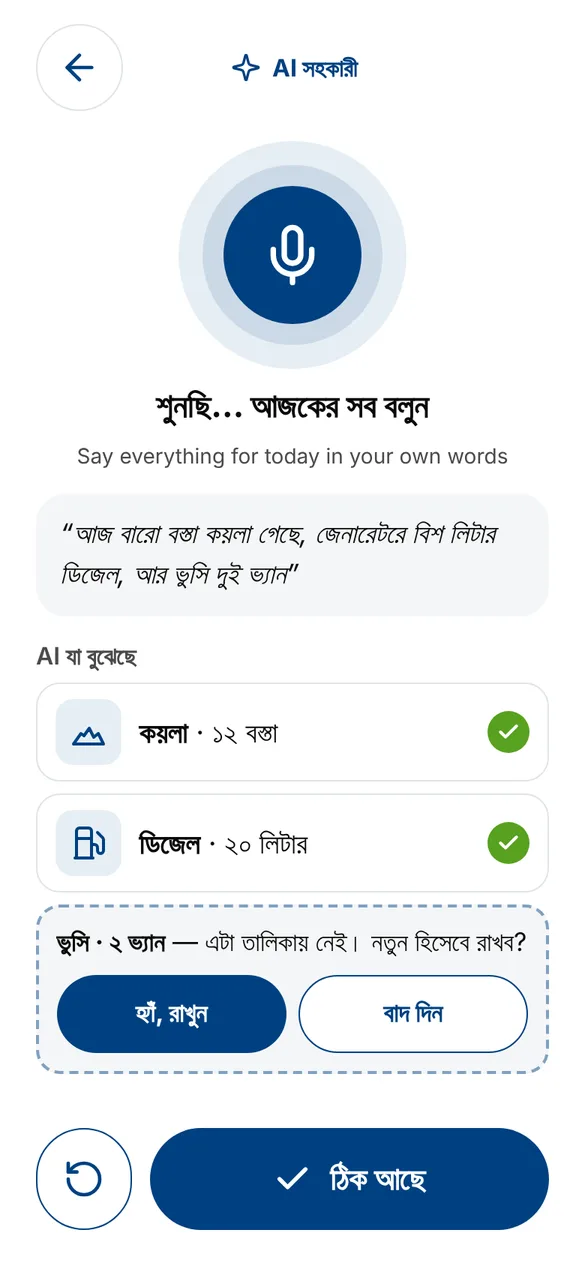
- Step 4 · Proof
A photo of the receipt as evidence
The worker photographs the coal receipt. The amount is hard to read, so the app asks a two-button question instead of making anyone type.
Behind the scenesDocument reading pulls quantity, date and seller. The photo is stored as evidence and linked to the entry for audit.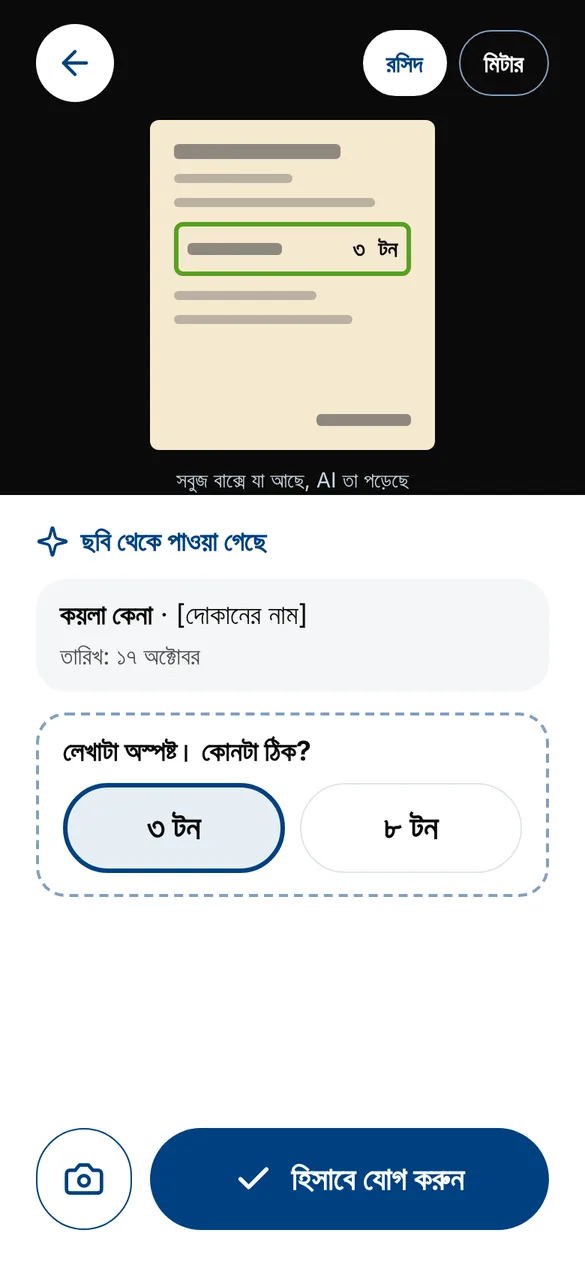
- Step 5 · Review
Hear it back, then confirm
Everything for today in one list, with a pencil on each line. The worker taps the speaker to hear it read aloud, then confirms with one large button.
Behind the scenesNothing counts until this confirmation. Each entry records how it was made (tap, voice, photo) for the evidence share in reports.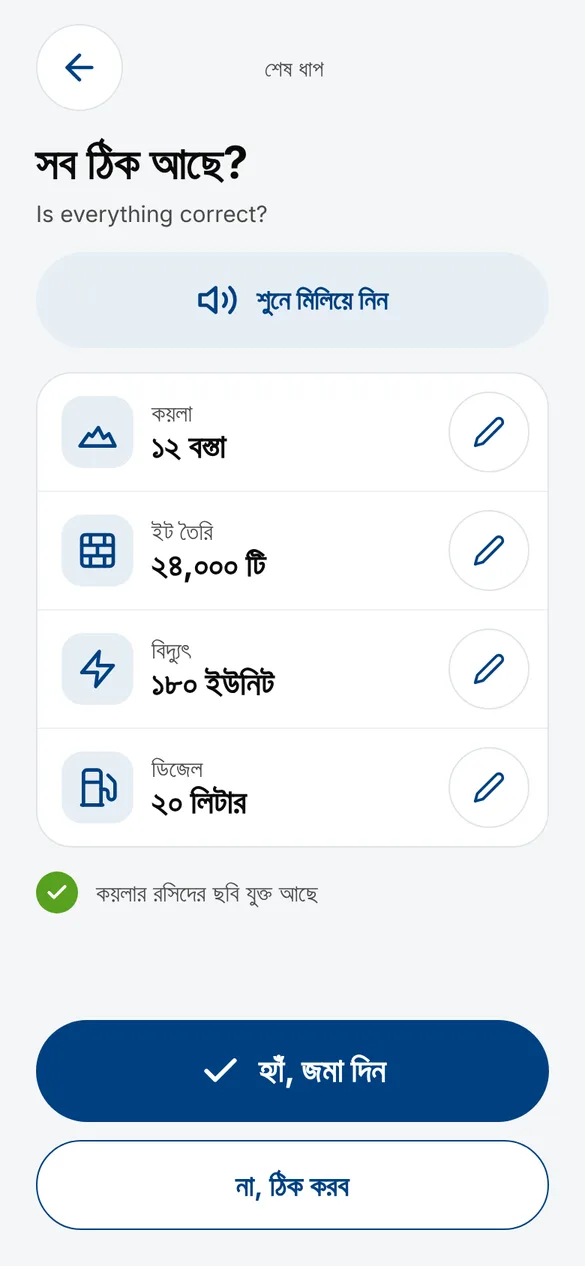
- Step 6 · Saved
Saved, even with no network
The screen says plainly that there is no internet right now and that the entry will send itself later. The worker doesn't need to do anything else.
Behind the scenesThe entry waits in the phone's local database. On sync the server converts units, applies versioned emission factors and GWP, and classifies it: Scope 1 · Stationary combustion.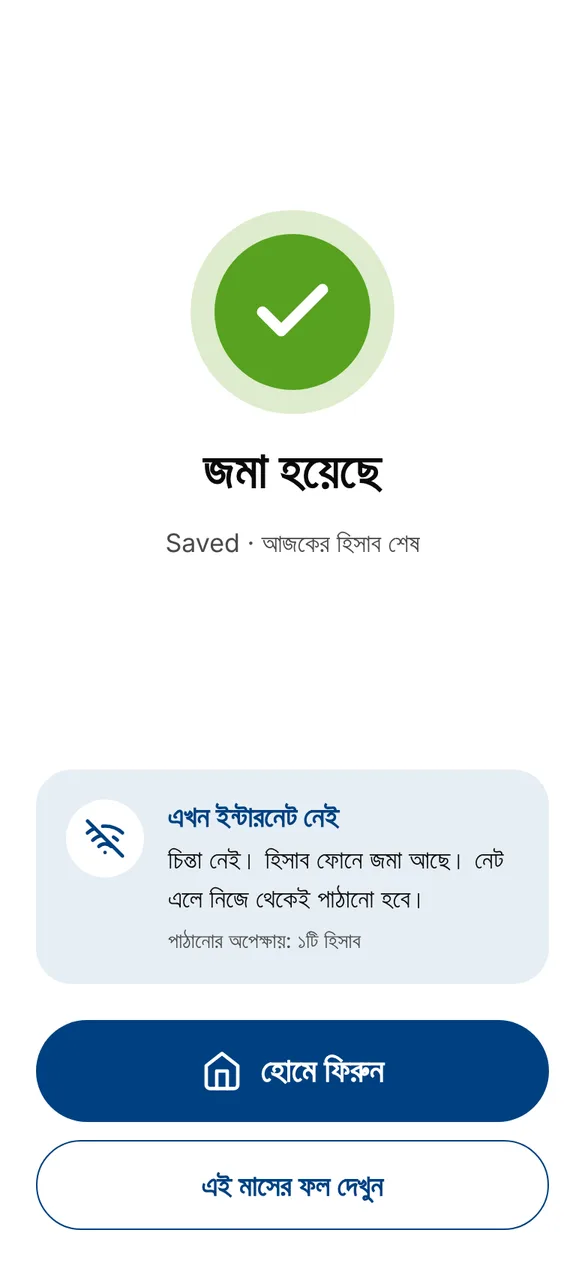
- Step 7 · Result
The month in one sentence: four tonnes less
At any time the worker can see this month against last month, where most carbon comes from, and one tip from the company. The same data feeds the full GHG report for managers.
Behind the scenesApproved entries roll up by month, site, scope, category and gas. The admin has already reviewed any entries AI flagged as unusual.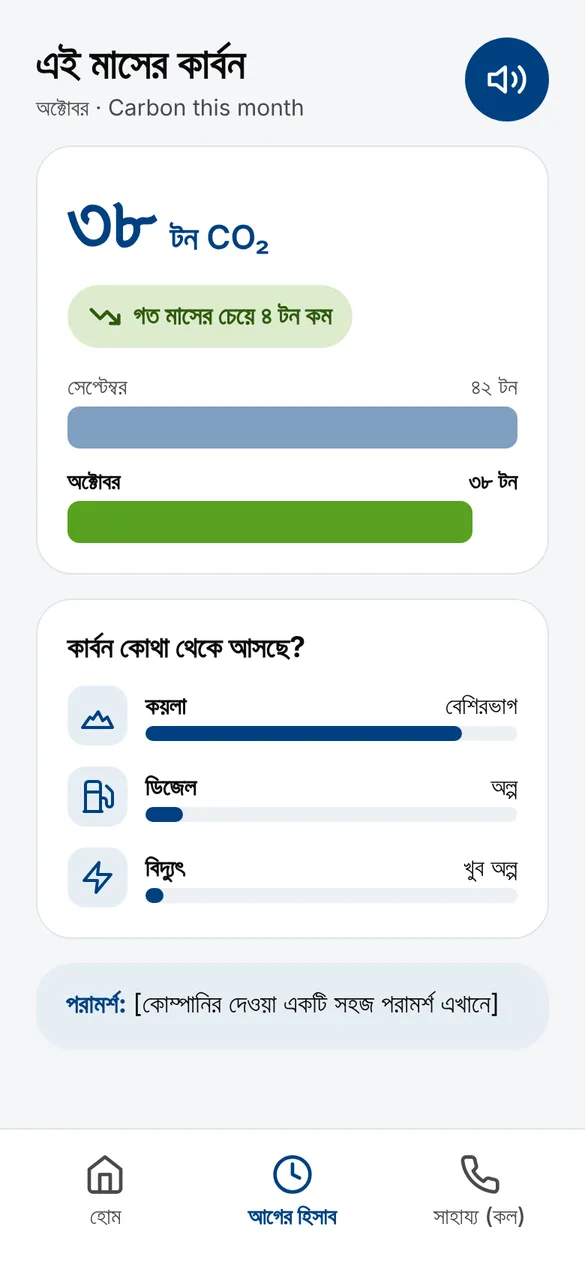
We're looking for volunteers
Lend your time. Change an industry.
We need people on the ground and behind the screen. No climate background required, just curiosity and a few hours a month.
Field data collector
Visit factories and help workers use the app.
Data analyst
Clean, check and study emissions data.
Community liaison
Bangla and local-dialect support for surveys.
Communications
Write, design and share our findings.
- Field work
- Data analysis
- Bangla
- Research
- Design
- Writing
- Training
- Community outreach
- Field work
- Data analysis
- Bangla
- Research
- Design
- Writing
- Training
- Community outreach
Support our research
Fund research that cuts real emissions.
Your support pays for field studies, the STZ Collect app, and free reports for factories that can't afford consultants.
Where your support goes
- Field research45%
- App & data30%
- Free factory reports15%
- Operations10%
We publish how every contribution is used.